
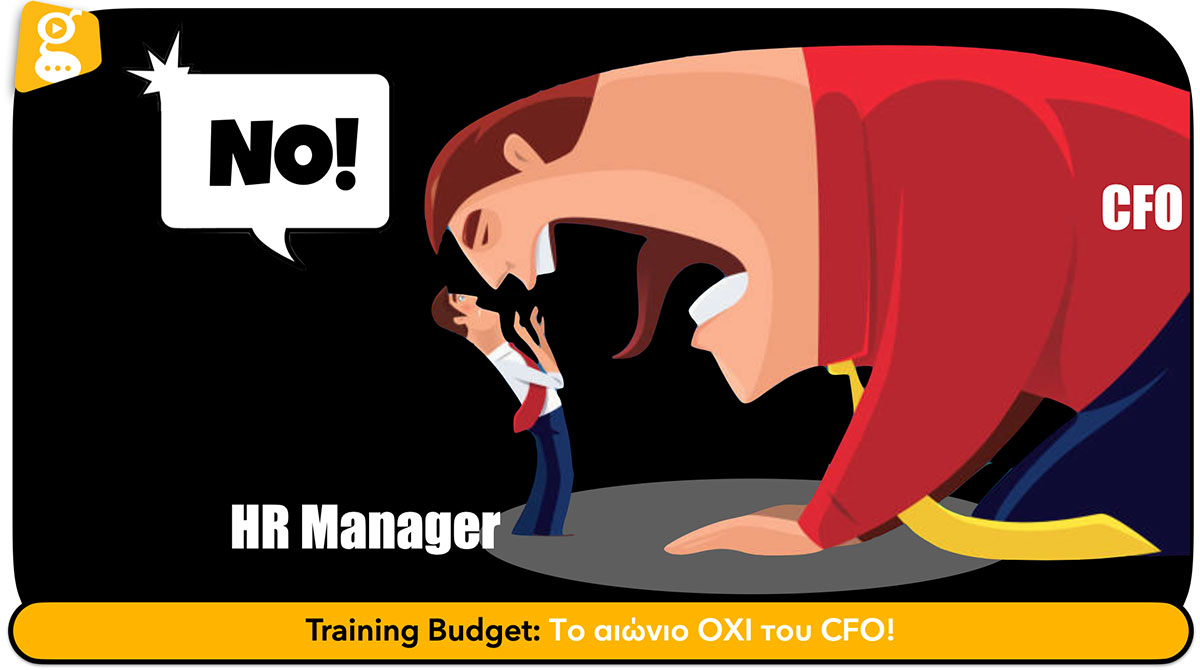
HR Manager vs Budget Committee: Battle to the Final… Investment!
Have you ever found yourself explaining why training is necessary, while the CFO’s gaze has already drifted into space? Perhaps when you say, “we need a budget for training,” you hear responses like:
- “We don’t have room for that this year”
- “Let’s wait and see how the year goes”
- “Can we do it with internal resources?” (i.e., not at all)
If this sounds familiar, don’t worry! It’s time to stop asking for a budget like you’re begging and start claiming it as a real business investment. Here’s how!
1 Speak the Language of Numbers, Not Wishes
Saying “training is important” doesn’t move any finance director. Numbers, however, do. What to do:
- Connect with business KPIs. How will training reduce error costs? How will it increase productivity or sales?
- Find comparative data (e.g., “Companies that invest 10% more in training see a 24% increase in productivity”).
- Demonstrate the return on investment (ROI). For every euro spent, what benefit do we get back?
2 Become a “Prophet” and Anticipate Objections
Instead of waiting for a “no” and trying to counter it, enter the meeting ready to answer common objections:
- “We don’t have budget” → “Then how will we reduce error costs/talent turnover?”
- “We don’t see immediate results” → “Let’s view training as an investment, not an expense. For example, leadership skill development reduces the need to hire external managers.”
- “We can’t take them away from work” → “That’s why we propose microlearning and blended solutions that don’t impact productivity.”
3 Make the Budget “Digestible” – Don’t Present it as a Cold Excel Sheet
If you go with a file full of numbers and general descriptions, don’t expect enthusiasm. What to do:
- Use storytelling: Show how successful training changed a team’s operation.
- Present success stories from other companies in the industry.
- Provide a clear, “broken-down” view of costs: e.g., “We need €50,000, which translates to €100 per employee – less than a corporate lunch!”
4 Show that Training ≠ Seminars, but a Competitive Advantage
If management sees training as a “nice to have,” they will never prioritize it. They need to see it as a success tool. What to do:
- Show how the skills gap costs more than the training itself.
- Demonstrate how a learning culture strategy improves employer branding and reduces talent turnover.
- Highlight the role of training in new technologies, innovation, and organizational resilience.
5 Start Small, Prove Value, and Ask for More
If a large budget intimidates you (or management), start with pilot programs. What to do:
- Propose a small training project with clear metrics.
- Measure the impact (e.g., via surveys, business outcomes).
- Once you see positive results, use them to claim a larger budget!
Conclusion: Training Budget = Budget for Success!
Instead of asking for a training budget as an “extra cost,” present it as a business investment with measurable returns. So, next time you enter a budget meeting, come prepared:
✅ With data and ROI, not “it would be nice to do”
✅ With answers to objections before they even appear
✅ With a plan linked to business goals
✅ With small pilot programs that show quick results That way, not only will they not say “no,” but they might even say… “Should we invest even more?”





Leave a Reply